Past Issues

Online access to past issues of The Baffler is coming soon!

No. 21

No. 21 Your Money and Your Life

Table of Contents
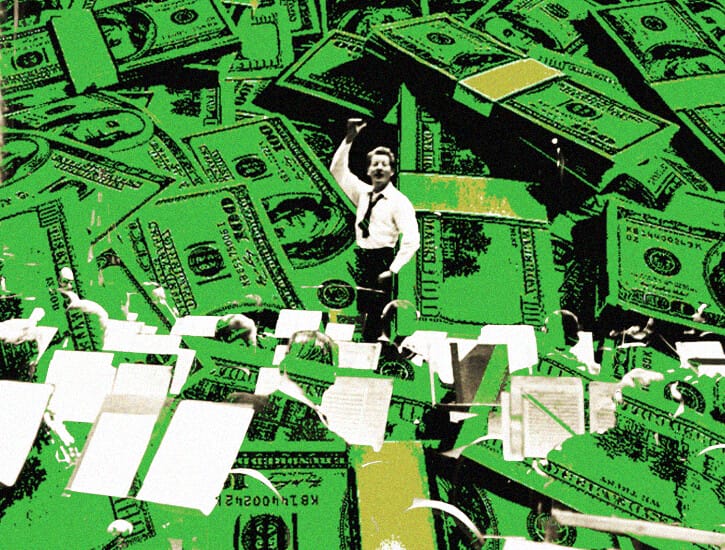
In the third and last issue of our revival year, Thomas Frank tells you how theory met practice in Occupy Wall Street (and drove it out of its mind), Rick Perlstein explains how Mitt Romney lies to be loved, and David Graeber asks whether it’s possible to think that you believe something when, in fact, you don’t, or to think that you don’t believe something when, in fact, you do? (Answer: yes and yes).

No. 20

No. 20 The High, the Low, the Vibrant!

Table of Contents
In our summer culture issue, we bring you decomposing cities that tremble with vibrancy, art museums where cash-and-carry aesthetics are the rule, journalists on the endless education of the president, and imperial foundations and their pet broadcasters on public radio. Where else can you learn why Ira Glass’s This American Life is so annoying, or take in the lame, postideological pantomiming of Jon Stewart & Stephen Colbert, or admire the performance art of Harvard fraud Adam Wheeler and laugh at the Ivy mothership’s efforts to smite the pretender down? 172 pages.

No. 19

No. 19

Table of Contents
Alighting on the bloodless crossroads of culture and technology, this issue featured salvos by Thomas Frank, Chris Lehmann, Barbara Ehrenreich, Rick Perlstein, David Graeber, Jim Newell, Will Boisvert, Dubravka Ugrešić, Maureen Tkacik, and Robert Eshelman, plus a dazzling array of stories, poems, and graphic art, and a newly discovered 1936 essay by James Agee, “Cotton Tenants.” The issue was produced in Cambridge, New York, and Washington, D.C. and released in March 2012 by new editor-in-chief John Summers and new publisher MIT Press. “Like The Baffler of old,” said the Chicago Tribune, “the sharpest pieces show a caustic, playful ability to zero in on a pie-eyed media hypnotized by the zeitgeist.” $10.

No. 18

No. 18 Margin Call

Produced in December 2009 in Chicago, Washington, and New York “after having been painstakingly ghostwritten by Bill Ayres.” Published January 2010. 178 pages. $12.

No. 17

No. 17 Superslayer Storybook

“Well, we’ll come right out and admit it. It’s been some time since you’ve heard from us.” Produced in Chicago in June 2006 in an apartment in The Flamingo Hotel. 96 pages, $10.50.

No. 16

No. 16 Nascar, How Proud a Sound!

As this issue went to press in June 2003, the Bafflers began to rebuild their charred headquarters. “We’re pouring the concrete and getting ready for the steel. If luck and money hold out, the roof should be on by winter.” 96 pages, $7.50.

No. 15

No. 15 Civilization With a Krag

Produced in November 2002, “shuttling between Dan Raeburn’s pied-a-terre in the fashionable Kenwood neighborhood of Chicago and our spread in Woodlawn. Our building is still a shell.” 96 pages, $7.50.

No. 14

No. 14 The God That Sucked

Produced in Spring of 2001. “On April 25, years of incendiary cultural criticism finally achieved ignition. A pre-dawn fire swept through our office, awakening residents of Chicago’s South Side to the unmistakable smell of burning Bafflers.” 120 pages, $7.50.

No. 13

No. 13 Vox Populoid

Produced in October 1999. 120 pages, $7.50.

No. 12

No. 12 Then Came Nylon

Produced in March 1999. 128 pages, $7.50.

No. 11

No. 11 Mid-Cult Today

The Baffler was produced by its editors in the summer of 1998, without benefit of focus groups, town-hall meetings, phone polls, beeper studies, or, in fact, any input from the public at all.” 128 pages, $6.

No. 10

No. 10 The Folklore of Capitalism

“Please note that The Baffler is, yes, still an independent magazine. It’s not owned by anybody, unless you count its editors.” 128 pages, $6.

No. 9

No. 9 Interns Built the Pyramids

The labor issue, co-published with Fantagraphics Books. “The Baffler takes its particularly unhappy tone from the works of Dead Moon, Sleater Kinney, the Motards, the soundtrack to Dutch Harbor, and Harlan County, U.S.A.” 128 pages, $6.

No. 8

No. 8 The Cultural Miracle

“Please be warned: much of the material that follows is polemical in nature. It may seek to persuade you of something.” Produced in February 1996. 128 pages, $5.

No. 7

No. 7 The City in the Age of Information

“No, we don’t have an e-mail address. Or a telephone, either.” Produced in Chicago in June 1995. 128 pages, $5.

No. 6

No. 6 Dark Age

The largest issue to date, this one was produced in November and December 1994, totalled 192 pages, sold for $5.

No. 5

No. 5 Alternative to What?

Produced in November 1993 in the tiny office of WHPK-FM, at the University of Chicago’s Reynolds Clubhouse. “The large screen of their computer and access to their gigantic record library made the task much easier than before. The nearby roof was perfect for cookouts and drunken stumbling.” 168 pages, $5.

No. 4

No. 4 Twenty-nothing

“Dedicated to the memory of our friends gone under to the brainwash of corporate jobs, the intense and enthusiastic gone salesmen or congressional staffers; those we slammed with, now in the military, hopeless on the dole, struggling on for the long lost cause in small college towns, and otherwise dead.” Produced over three weeks in November 1992 on a Macintosh computer in Chicago. Published Winter/Spring 1993. 134 pages. $5.

No. 3

No. 3 Let's Deviance!

Laid out in a four-day marathon session in suburban Kansas City, this issue was printed on a Macintosh laser printer there in Winter/Spring 1992. At 107 pages, it sold for $5.

No. 2

No. 2 Suburbia

Produced at the University of Chicago, the editorial statement for number 2 tilted against slick postmodern advertisements. “In 1990 ‘avant-garde’ means something closer to being the first on the block to wear a Batman T-shirt than it does to inventing a truly meaningful, penetrating representational (or abstract) technique.” Published two years after number one, in the summer of 1990, it totaled 48 pages and sold for $3.

No. 1

No. 1

The first Baffler, produced in Charlottesville, Virginia during the summer of 1988. A line from Arthur Rimbaud’s Illuminations serves as the epigraph: “Ce poison va rester dans toutes nos veines même quant, la fanfare tournant, nous serons rendu à l’ancienne inharmonie.” At 48 pages, it sold for $2.